Blog


Thoughts on industrial real estate, bbq recipes and other meaningful things. 

The Government Steps in to Help the Supply Chain

The Government Steps in to Help the Supply Chain

by

As has been the case in recent years, the supply chain globally has faced numerous challenges and lots of delays. The delays lead to inconsistencies for businesses and the price for companies to transport goods has increased. This is partially due to the challenges that the supply chain provides and partially due to inflation and interest rates as well. These issues need solutions so that producers, transporters, and consumers alike can ease the financial stress that the backups and rising rates have caused. The government, and more specifically, the Department of Transportation have gotten the ball rolling on an initiative titled “Freight Logistics Optimization Works” or FLOW for short. The goal of this initiative is to use the power of communication in the private sector of logistics to initiate an easement of lag and rising rates. 

The communication is derived from companies sharing data and viewpoints of the supply chain enterprise so that transparency can be used as a catalyst for working towards a cleaner and more efficient supply chain. The DOT will work as an independent steward to provide a shared view of our national logistics system, the goal of this facilitation is to make importing and exporting more efficient so that everyone can save money and relieve the tensions at ports, air cargo, trucking, and warehouses. This initiative is in its early stages and it will be fascinating to follow the supply chain to see how this affects its efficiencies. 

Below is a short list of initial partners involved in this initiative:

Port Authorities: Port of Los Angeles, Port of Long Beach

Business: Albertsons, Target, Land O’ Lakes

Logistics and Warehousing: FedEx, Prologis, UPS 

	Retailers Need Industrial Space

Retailers Need Industrial Space

by

A unique situation has unfolded in the industrial real estate market as we move through the year 2022. Retailers across the board are trying to adjust to supply chain whiplash and difficulty moving inventory by leasing industrial space. In Salt Lake City, the numbers tell the story of this situation through a continued  2% vacancy rate in our market. This makes available space increasingly difficult for tenants to find. 

The Salt Lake market has been very tight on space due to the robust Utah economy and the demand from businesses to ship goods to and through the state. The trend also exists across the country, with demand for space partially stemming from a “just-in-case” mentality rather than the “just-in-time” inventory method. The industrial market is on track to break records again this year. It will be interesting to follow the trends for how users change the scope of industrial real estate throughout the rest of the year.

Welcome IPG’s Two Newest Members

Welcome IPG’s Two Newest Members

by

Industrial Property Group (IPG) is pleased to announce the addition of Camila Gomez as Property Management & Development Assistant. Camila will be key in assisting with both the development and property management divisions at IPG.  Camila will be working closely with Chris Delong, the Vice President and Senior Property Manager. She assists with managing the daily operations and maintenance, tenant relations, property inspections and preparing and tracking operations budgets and invoices. Camila will also support the development team with their construction projects. 

“I graduated from BYU with a bachelor’s degree in Political Science, with an emphasis in Public Affairs and Diplomacy. I am an experienced paralegal where I worked closely with attorneys to provide support on a number of high-priority cases and projects. As I learned more about real estate, I became particularly interested in Industrial and Commercial Real Estate. I am very excited to be part of the IPG team and to contribute on the daily tasks that allow our customers to improve and grow their business.”

Also joining the team is Jay Flynn.  Jay joined the brokerage team as an Industrial Information Specialist. Jay started as an intern for IPG during his last semester at the University of Utah and has moved into a full-time role with IPG. He will be focusing on assisting our Director of Information Services and the Vice President of Client Relations in expanding our knowledge of the market and in gathering data.

“I started out as a biology major at the U and as soon as I switched to Business in my second year of college I immediately zoned in on commercial real estate. I knew that it was the place in business for me and being at IPG has been a dream come true. I am excited for the incredible opportunity that this team has provided me. I am grateful to be around such poised and intelligent people. I know the learning opportunities are endless.”

Manufacturing in the U.S Continues to Thrive

Manufacturing in the U.S Continues to Thrive

by

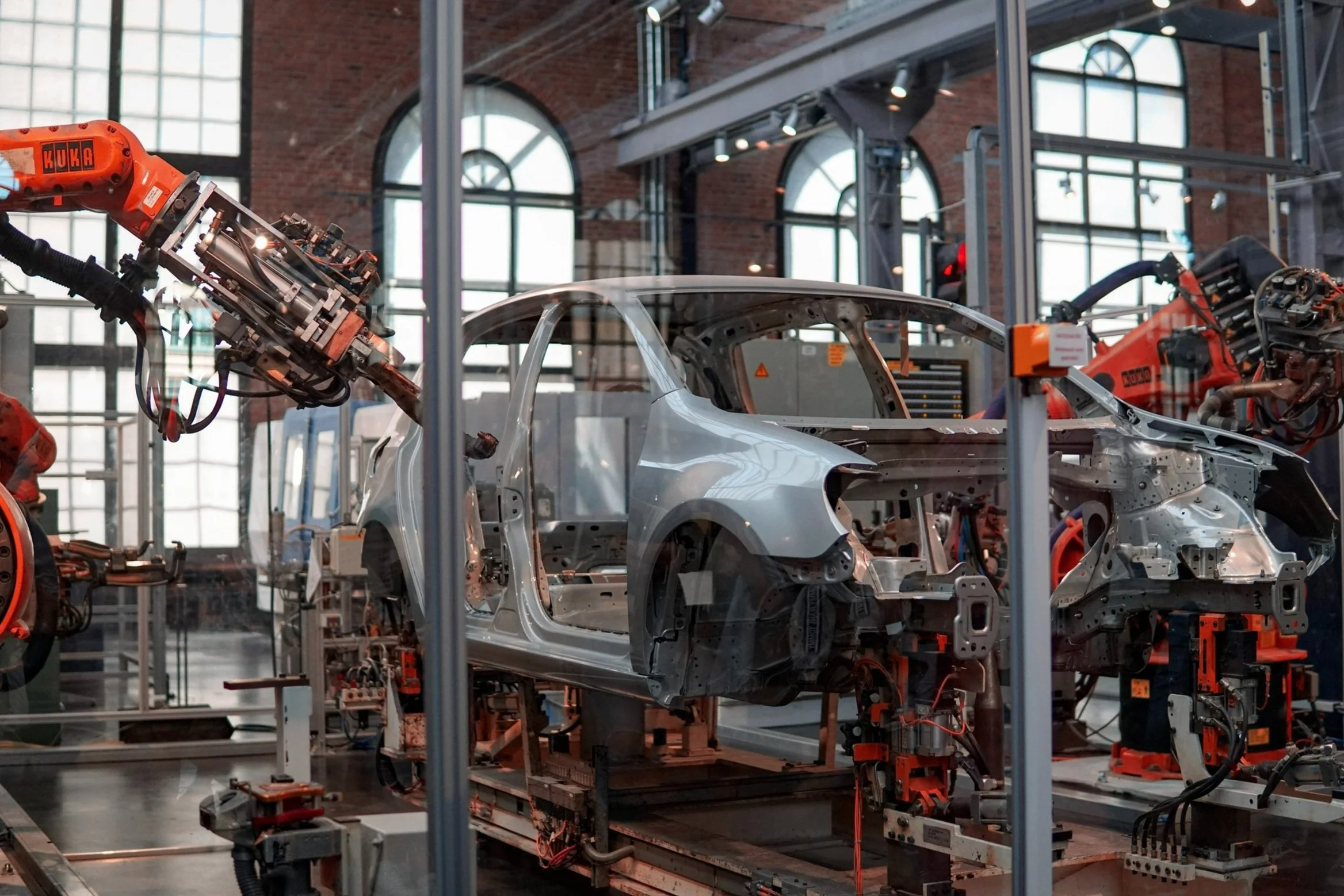
During the pandemic, companies began a frenzy of reshoring, onshoring, and nearshoring and the trend seemed like it would trail off when things started to open back up worldwide. It was assumed that people would offshore again for production cost purposes and many companies would be back to relying on China and other countries for production. American companies this year have relocated their manufacturing either back to the U.S or close by at a greater rate than they did in the first six months of the pandemic. There are a few factors that go into this move, supply chain costs have risen so high that importing goods from different countries costs more than its worth, port bottlenecks have made wait times too long, and some companies are just looking to expand their capacity and want to do it on American soil. 

Construction for manufacturing facilities is reaching an all-time high as well, eclipsing last year's industrial building construction numbers and vacancy for these spaces is constantly shrinking due to the high demand for space. The key to making sure that the cost of production does not skyrocket in the U.S due to the strength of the dollar is to ensure that these companies are working efficiency into each part of the manufacturing process without compromising the quality of the goods they are producing. U.S manufacturing produces more jobs which leads to more money being spent in our economy.  It also means that in a time when the U.S is importing almost 80 billion dollars more goods than we are exporting, onshore manufacturing could help balance our trade deficit and allow for a boost in our economy as well. 

AI Integration iN Manufacturing

AI Integration iN Manufacturing

by

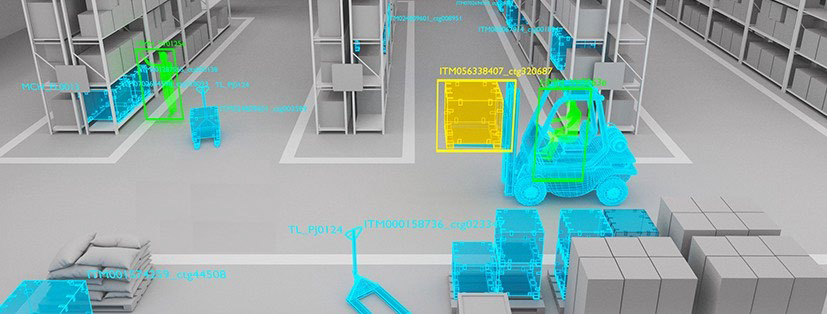
The world of manufacturing is consistently modernizing to ensure that the efficiency of production in a warehouse is maximized. Tim Hoj, CEO of Hoj Innovations allowed us the opportunity recently to host an executive event at his company's corporate office and warehouse. Hoj Innovations is a great example of a company that has pioneered aspects of manufacturing efficiency and helped companies save time and money in their warehouses. At the forefront of AI integrated manufacturing technology is a subcategory referred to as computer vision. This technology uses images from cameras and videos to identify objects and react to the images that computer vision is “viewing.” There are many financial, quality, and safety advantages to this technology with the following being the major highlights of its integration into warehouses. 

Computer vision is capable of automating payroll and onboarding responsibilities through automated document processing, furthermore, it is capable of processing invoices and controlling inventory management as well. This means that from the hiring process to tracking inventory management there is an automated system controlling the process with precision. Computer vision is capable of tracking quality standards through ultraviolet and infrared lights to catch mistakes down to the most minuscule detail. Last on the list of computer vision highlights is the topic of safety and using custom metrics, computer vision can track dangerous areas of a warehouse. It will track when employees are in high-risk areas as well as prevent machines from breaking by tracking the deterioration of a machine which allows workers to provide the proper maintenance on a machine before it breaks down completely. The integration of AI in manufacturing will be a long process but eventually could re-shape the efficiency of a business's production and save time and money in a multitude of areas.